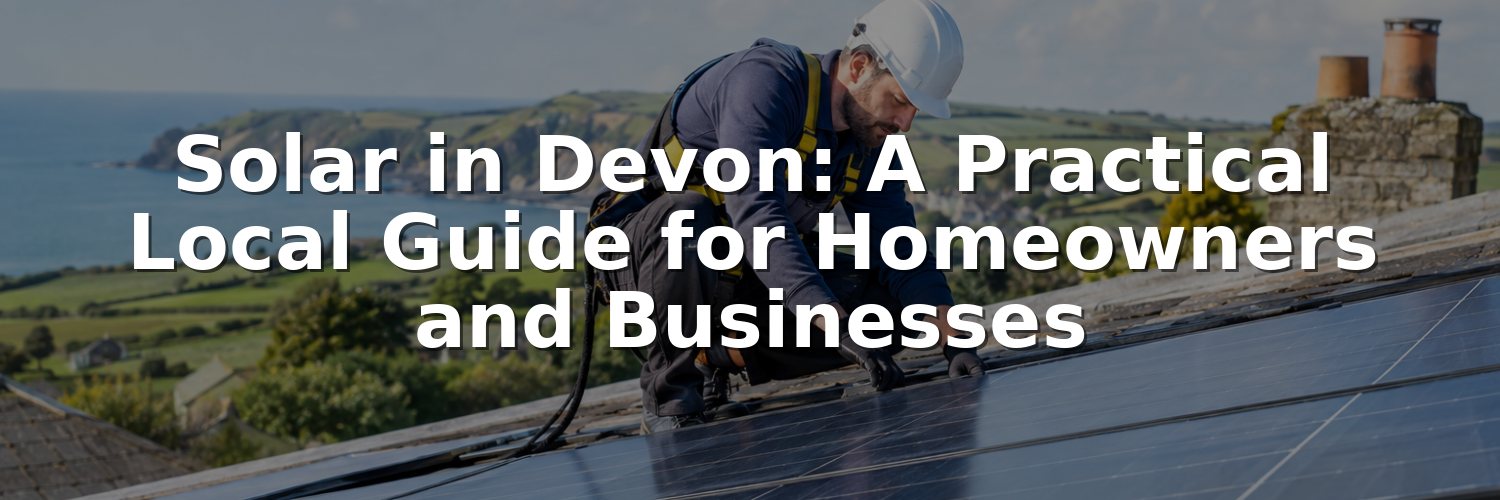
Devon’s mix of coastal exposure, rural roofs and scattered commercial properties makes it a great region for solar. This guide helps homeowners, landlords, businesses and property developers in Devon understand the local considerations that affect solar installations and long-term performance.
Assessing your site in Devon
Not all roofs or sites perform the same. Start with a practical assessment that covers:
- Orientation and tilt — south-facing is best, but east/west arrays still perform well across the year.
- Shading checks — hedgerows, mature trees and neighbouring buildings are common in Devon’s towns and countryside; even partial shading can reduce output.
- Roof condition — slate, tile and metal roofs are common locally; ensure the structure is sound and consider minor repairs before installation.
- Ground availability — farms and larger properties may suit ground-mounted or small solar farms if roof space is limited.
Planning and local regulations
Devon includes conservation areas, listed buildings and AONBs (Areas of Outstanding Natural Beauty), so planning can be important:
- Check whether your property is listed or in a conservation area — you may need planning permission for visible rooftop changes or ground-mounted systems.
- Local planning officers often allow solar where visual impact is limited; early pre-application conversations reduce delays.
- For commercial and farm installations, coordinate with local councils or housing associations to confirm requirements and potential incentives.
Choosing the right system for Devon weather
Devon is milder than other UK regions but receives significant cloud and rain at times. System choices should reflect that:
- PV panels — high-efficiency panels perform better in low light; consider them for shaded or east/west roofs.
- Inverters — string inverters are common, but microinverters or optimisers help where shading or varied roof angles occur.
- Battery storage — useful for rural areas with intermittent grid issues or for EV owners wanting to charge from solar.
- Hybrid systems — offer the flexibility to export, store or use generation on-site and suit businesses needing reliable daytime power.
Practical tips for farms and rural properties
Devon’s agricultural sector often benefits strongly from solar. For farmers and estates consider:
- Dual-use land — low-level ground arrays or agrivoltaic solutions can allow grazing beneath panels.
- Large roof opportunities — barns and industrial agricultural buildings are ideal for commercial PV systems and can substantially reduce running costs.
- Maintenance access — design arrays with safe, maintainable access especially on larger farm roofs.
- For tailored agricultural advice see our farming guidance at https://solarwebsites.co.uk/site/farming-solar/.
Commercial and community buildings
Schools, hotels, care homes and small businesses across Devon can use solar to cut operating costs and demonstrate sustainability:
- Energy audits — start with an audit to size a system and identify low-hanging efficiency gains.
- Roof condition and access — flat roofs on commercial properties may suit ballast-mounted systems; pitch roofs require secure fixings.
- Finance and incentives — explore financing options to spread cost; some community projects are eligible for specific support.
- We have specialist content for hospitality and care sectors, e.g. solar for pubs and care homes via https://solarwebsites.co.uk/site/solar-for-pubs/ and https://solarwebsites.co.uk/site/care-homes-solar/.
Maintenance, monitoring and long-term performance
Devon’s coastal salt air and rural dust mean maintenance matters:
- Regular inspections — check mounting, fixings and inverter performance annually and after severe weather.
- Cleaning — panels typically need little attention, but panels near farm dust or sea spray benefit from occasional cleaning to maintain output.
- Monitoring systems — real-time monitoring helps spot underperformance quickly and track savings.
- Upgrades — batteries, inverter replacements or panel upgrades can extend value; plan for modular additions.
Working with installers and designers in Devon
Choose partners who understand local conditions and can offer the full service from design to finance and ongoing support:
- Look for installers experienced with local planning, roof types and environmental constraints.
- Request a bespoke site survey and a clear quote that covers works, maintenance and monitoring options.
- Solar Websites can help present your project online and manage lead generation, quotes and customer communication throughout the install process.
- For developers and larger projects consider early-stage solar consultancy and system design to integrate generation with building plans.
With the right site assessment, system choice and local knowledge, Devon properties — from coastal cottages to farms and commercial roofs — can benefit from reduced bills, greater energy independence and a smaller carbon footprint.