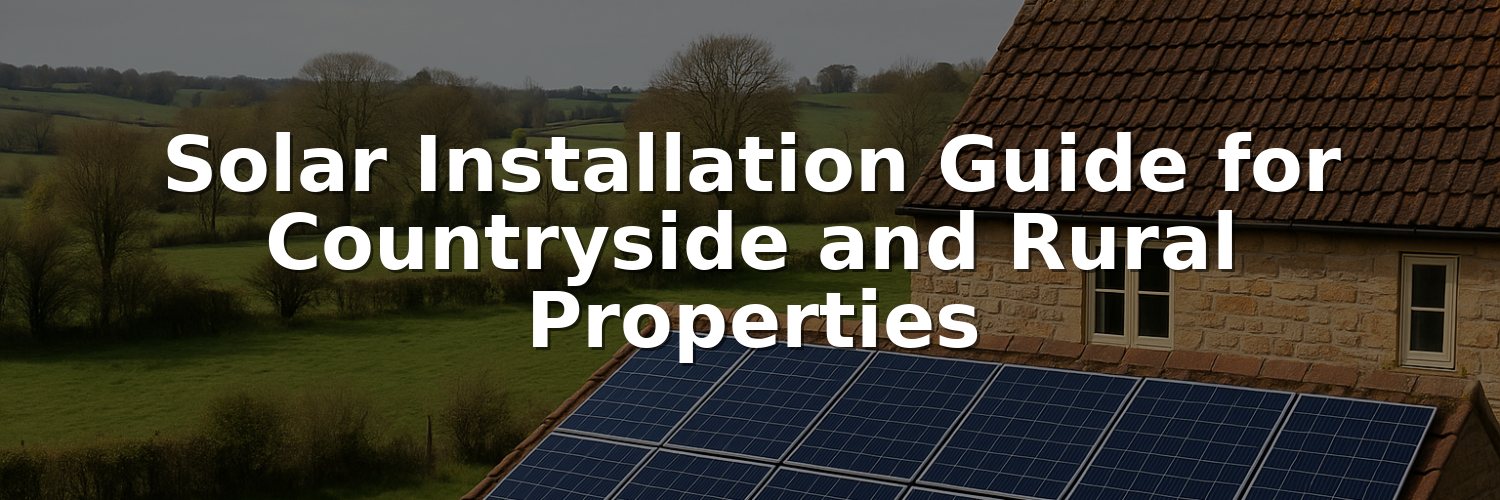
Rural properties — from farms and large estates to isolated cottages — offer excellent opportunities for solar power but also present unique challenges. This guide walks landowners, farmers and rural homeowners through the key considerations when planning a solar installation, so you can make an informed decision that delivers long-term savings and energy resilience.
Assessing your site: roof, land and orientation
Start with a practical assessment of where panels can go and how much energy you might generate.
- Roof suitability: Check roof orientation (south-facing is ideal), slope, shading from trees or buildings, and structural condition for a roof-mounted system.
- Ground-mount options: Farms and larger plots may suit ground-mounted arrays. These allow optimal tilt and easier maintenance but require more space and planning permission in some cases.
- Solar roof tiles and barns: Consider solar roof tiles for listed-style properties or visually sensitive sites; barn roofs often provide large, unobstructed areas for high output.
Grid connection, off-grid and hybrid solutions
Rural locations sometimes face limited grid capacity. You’ll need to match your choice of system to local infrastructure and your energy goals.
- Grid-tied systems: Best where a reliable grid connection exists and offers export opportunities. They’re typically most cost-effective.
- Off-grid systems: For remote properties without grid access, design must include sufficient PV capacity and battery storage to cover demand year-round.
- Hybrid systems: Combine grid connection with batteries to improve resilience during outages and reduce peak import charges.
Planning permission, heritage and environmental considerations
Rural projects may need extra checks compared with urban installs.
- Planning permission: Many farm and domestic rooftop systems are permitted development, but large ground arrays, listed buildings or locations in conservation areas often require planning consent.
- Environmental impact: For farmland and greenfield sites, consider ecology surveys and siting to avoid disrupting habitats.
- Heritage sites: Solar roof tiles or discreet ground arrays can help preserve appearance when working with listed properties or historic landscapes.
Designing for rural energy needs
Match system design to typical rural energy patterns — seasonal use, agricultural loads and transport electrification.
- Load profiling: Map daily and seasonal electricity demand (e.g. milking parlours, grain drying, heating) so the system produces value when you need it most.
- Battery storage: Storage can shift midday generation to evening use and provide backup during outages — key for businesses and remote homes.
- EV charging and farm equipment: If you plan electric vehicles or battery-powered machinery, size your PV and battery to support charging without overstressing the grid connection.
Grants, finance and commercial options for rural owners
Explore funding routes to help make larger rural projects viable.
- Finance options: Many suppliers, including those listed at Solar Websites, display finance options and can structure repayments to suit cashflow-sensitive businesses.
- Commercial leases and PPA: For farms and large roofs, power purchase agreements (PPAs) or roof leases can deliver income without upfront capital expenditure.
- Local incentives: Check local council or agricultural schemes that sometimes support renewable energy installations on rural land.
Operations, maintenance and longevity
Rural systems can be low maintenance if planned properly, but remote sites need a sensible upkeep strategy.
- Regular inspections: Include periodic solar system inspections and cleaning to maintain output; remote sites may benefit from scheduled visits.
- Monitoring systems: Install solar monitoring to spot performance drops early, especially useful for large arrays or multi-site operations.
- Repairs and upgrades: Factor in access for any future inverter replacement, battery servicing or panel upgrades to extend system life and returns.
Case studies and local expertise
Working with a specialist who understands rural challenges reduces risk. Solar Websites provides tailored website tools and project showcases that help installers present relevant local experience, including agricultural projects like those found in farming solar resources.
- See farming solar for examples of how agricultural properties can successfully adopt PV and battery solutions.
- Also consider sector-specific examples such as solar for pubs or care homes solar to compare approaches for commercial rural buildings.
Rural solar projects offer strong potential for lower energy bills, reduced carbon footprints and increased energy independence — but they work best when site specifics, planning constraints and operational needs are assessed up front. Engaging a supplier who can provide detailed site assessments, tailored design and ongoing monitoring will help you unlock the greatest value from your rural solar investment.