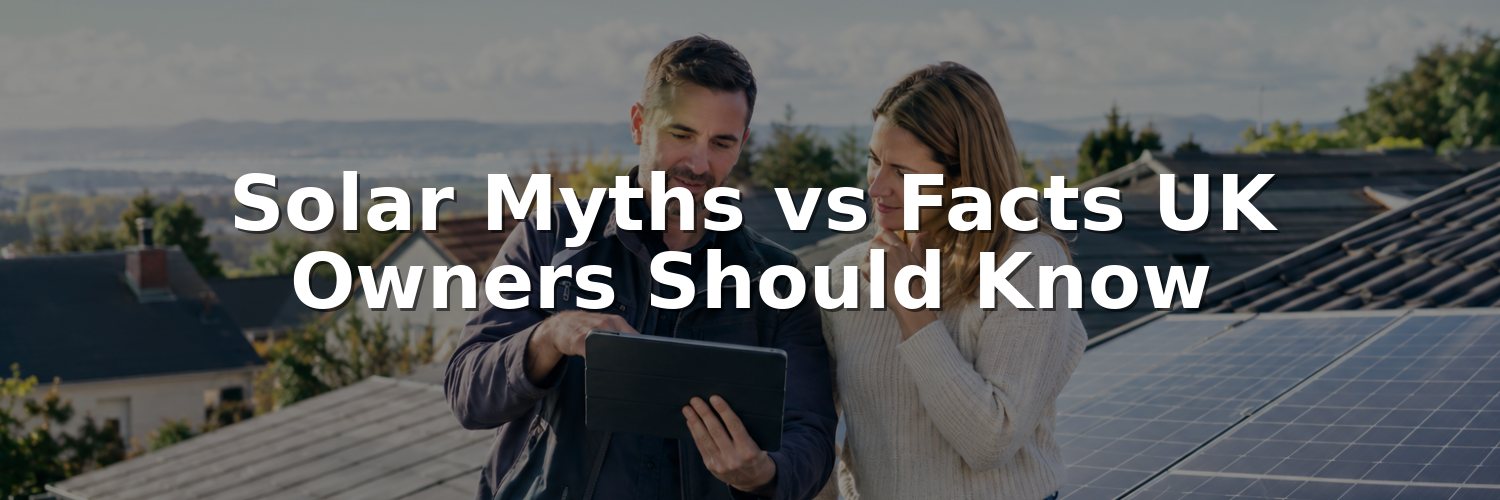
Going solar in the UK generates plenty of questions—and a fair few myths. This post separates the common misunderstandings from reality so homeowners, landlords and businesses can make smart choices about solar PV, batteries and system design.
Myth 1: Solar doesn’t work well in the UK because it’s cloudy
Fact: Solar panels generate electricity from daylight, not just direct sunshine. Modern PV panels perform well in the UK climate and often produce significant output during spring and summer months. Cloud cover reduces output but doesn’t stop generation entirely. System design, panel orientation and the right inverter or monitoring setup can maximise real-world yield.
Myth 2: Solar panels only make sense for detached homes
Fact: Solar is suitable for a wide range of property types. Flats with communal roofs, terraced homes, commercial buildings, farms and even pubs can benefit. Solutions vary—roof-mounted arrays, ground-mounted systems, or integrated solar roof tiles for new builds. Organisations such as housing associations, schools and hospitality businesses can all see measurable savings and carbon reductions.
Myth 3: Batteries aren’t worth it in the UK
Fact: Batteries are increasingly valuable for many owners. They store excess daytime generation for evening use, reduce peak grid imports and improve resilience during outages if paired with hybrid or off-grid arrangements. Economics depend on household consumption patterns, export tariffs and available incentives. A well-designed battery can raise self-consumption and long-term savings.
Myth 4: Solar panels need a lot of maintenance
Fact: Solar PV is relatively low maintenance. Regular visual checks and occasional cleaning are usually sufficient. Most systems come with durable warranties and monitoring tools to flag issues early. For commercial or agricultural installations, scheduled maintenance and performance checks ensure consistent output and protect the investment.
Myth 5: Solar panels will damage my roof
Fact: When correctly designed and installed, solar systems can actually protect roof areas they cover. Installers use secure, roof-friendly mounting systems and follow industry best practice to maintain weatherproofing. Pre-installation surveys evaluate roof condition—if repairs are needed, it’s sensible to do them before fitting panels. Reputable installers also check structural suitability and provide documentation for insurers and property records.
Myth 6: Solar is only about saving on energy bills
Fact: Reducing electricity bills is a major benefit, but solar delivers wider value: lower carbon footprint, increased property appeal, energy independence, and potential export earnings where applicable. For businesses and public-sector bodies, solar can help meet sustainability targets, improve energy resilience and stabilise operating costs over the long term.
Myth 7: All solar companies offer the same product
Fact: Quality, service and system design vary significantly across the market. Choose an installer who provides transparent quotes, detailed system design, performance monitoring and ongoing support. A full-service provider like Solar Websites combines product showcases, online quote forms and energy monitoring integration to help customers compare systems and anticipate savings. Check portfolios, testimonials and case studies to confirm experience for projects similar to yours.
Making the right decision for your property
Practical steps to separate facts from myths for your project:
- Get a site survey: Accurate shading analysis, roof condition and consumption data matter.
- Ask for modelling: Expected yields, seasonal variation and financial projections should be provided.
- Consider batteries and monitoring: These affect self-consumption and resilience.
- Compare quotes: Look beyond price—warranties, panel brands, inverter technology and aftercare are important.
- Review case studies: See real examples for similar properties—commercial clients and farms often find tailored solutions. For instance, businesses in hospitality or specialised sectors can learn from targeted implementations such as for pubs.
If you manage a farm, care home or another specific property type, tailored guidance helps. Farms can benefit from dedicated farming solar approaches, while care homes need resilient systems and clear operational benefits. Solar Websites includes sector pages and project showcases to help you evaluate suitable options and expected outcomes.
Separating myth from fact reduces risk and helps you choose the best system for your needs—whether a simple residential array, a commercial rooftop installation, or a hybrid system with battery storage and EV charging. With accurate assessments and reputable installers, solar is a practical, long-term investment for many UK properties.
Explore sector examples like farming solar and solar for pubs or review care home requirements to see how different approaches deliver benefits for each use case.
https://solarwebsites.co.uk/site/farming-solar/
https://solarwebsites.co.uk/site/solar-for-pubs/
https://solarwebsites.co.uk/site/care-homes-solar/