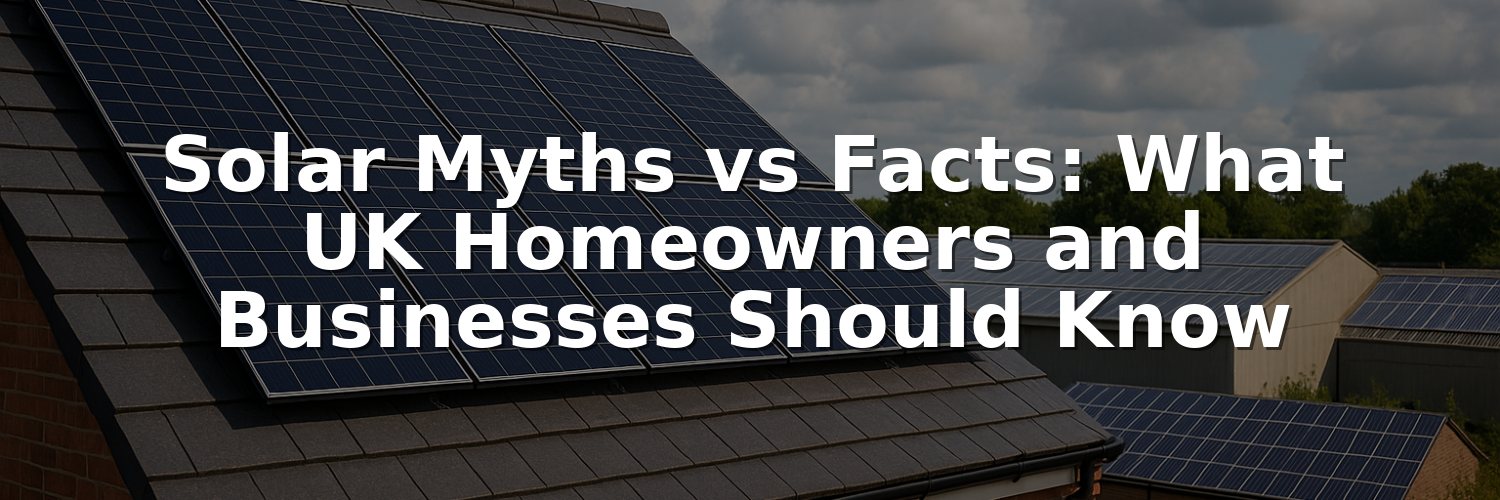
Solar energy remains one of the fastest-growing renewable choices for UK households and businesses, but a lot of myths still put decision-makers off. Below, we separate common misconceptions from evidence-based facts so you can make informed choices about solar PV, batteries and related services.
Myth 1: Solar panels don’t work well in the UK weather
Fact: Solar panels generate electricity from daylight, not just direct sun. Modern PV panels perform well in cooler, cloudier climates — and many UK installations deliver strong year-round output. Performance depends more on system design, orientation and shading than on occasional rain or overcast days.
Good installers, such as Solar Websites partners, will assess roof angles, local shading and expected yield before proposing a system.
Myth 2: Solar is too expensive and won’t pay back
Fact: Upfront costs have fallen significantly and financing options make solar accessible. Savings come from reduced electricity bills, potential export revenue, and long-term value uplift to properties. Payback varies by system size, usage pattern and energy prices, but for many homes and businesses in the UK solar delivers substantial lifetime savings.
Use a solar savings calculator and energy cost estimator — features available on professional sites — to model realistic returns for your property.
Myth 3: Solar panels need constant maintenance and fail often
Fact: Solar PV systems are low-maintenance. Panels have no moving parts and generally require only occasional cleaning and periodic checks. Batteries and inverters need more attention, but quality components and proper installation minimise issues. Regular maintenance and timely repairs extend system life and performance.
Look for providers offering solar panel maintenance, cleaning and inspection services to keep your system reliable.
Myth 4: You can’t get planning permission for solar
Fact: Most domestic and commercial rooftop solar installations in the UK fall under permitted development and don’t need planning permission. Constraints apply for listed buildings, conservation areas or some flat roofs, and larger ground-mounted or solar farm projects require planning approval.
Professional installers provide planning services and assessments to clarify requirements for your site and advise on permitted development rights.
Myth 5: Solar panels will ruin my roof or property appearance
Fact: When properly installed, panels are fixed without harming roof integrity. Installers use recommended fixings and flashings to maintain weatherproofing. For aesthetics, options include low-profile panels, integrated solar roof tiles and neat cable routing. For commercial or heritage properties, experienced teams design solutions that balance output with looks.
Case studies and before-and-after galleries can help owners visualise outcomes and reassure stakeholders.
Myth 6: Batteries aren’t worth it — export to the grid is better
Fact: While exporting surplus electricity can bring revenue, battery storage provides self-consumption, energy resilience and reduced reliance on volatile grid prices. For homes with high evening demand, EV chargers, or businesses needing backup power, batteries increase energy independence and can improve overall savings.
Hybrid systems and energy monitoring make it easier to balance export, storage and on-site use.
Myth 7: Solar is only for homeowners — not businesses or farms
Fact: Solar suits a wide range of building types and sectors. Commercial rooftops, warehouses, farms and schools can host large systems delivering rapid cost savings. Agricultural businesses often benefit from daytime generation and flexible system sizes — see farming-specific examples for inspiration.
Solar Websites works with diverse clients, from small businesses to larger enterprises, and can show sector-specific portfolios including farming solar and other case studies.
Choosing a reputable installer
Separating myth from fact is only the first step. A reliable installer will carry out a full solar energy assessment, produce a clear design, explain finance options and provide references. Look for firms that offer responsive website tools like online quote forms, solar monitoring integration and clear performance analytics so you can track the system’s output.
Solar Websites helps installers present transparent information online — from finance options display to interactive contact forms and live chat support — making it easier for homeowners and businesses to compare quotes, review portfolios and make confident decisions.
Final thoughts
Solar is a mature, flexible technology that can suit most UK properties when installations are properly designed and maintained. Don’t let myths delay your decision — get a tailored assessment that considers your energy use, roof characteristics and financial goals. Quality advice and realistic modelling will show whether PV, batteries, solar EV charging or hybrid systems are right for you.